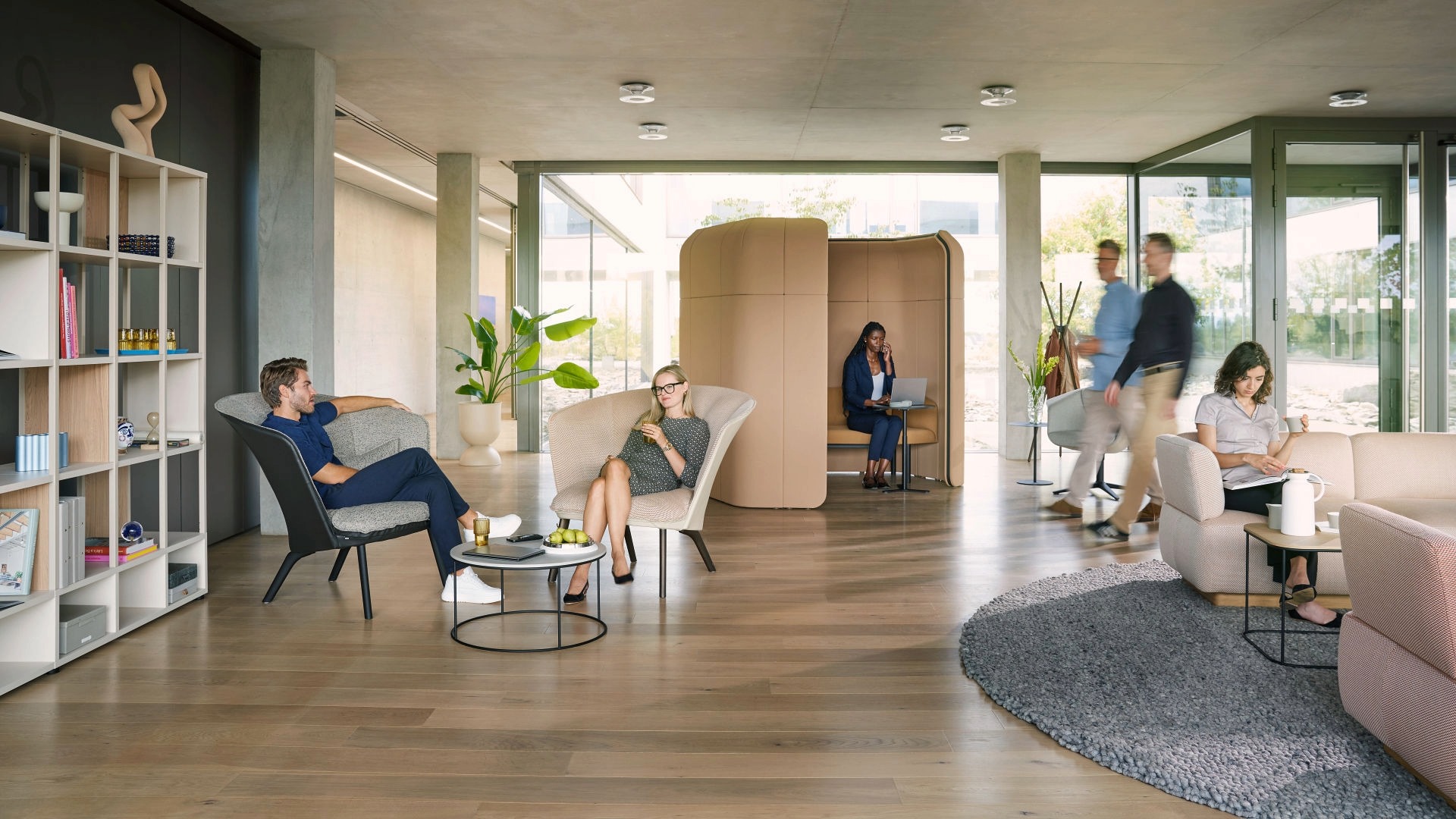

Modern office design is therefore increasingly responding with sensory-graded workspaces. Instead of a one-size-fits-all solution, different atmospheres are created with varying levels of stimulation – from energising zones to deliberately calming focus areas. The aim is not to adapt people to spaces, but to adapt spaces to different ways of perceiving the world.
Sensory gradation instead of a one-size-fits-all solution
People with high sensory sensitivity, in particular, benefit from workspaces that reduce visual, auditory and social stimuli. At the same time, other staff members deliberately need more activity and environmental stimuli to remain alert and productive.
This is why finely graded workplace options are becoming increasingly important. Different work settings make it possible to choose the right place depending on the task, how you’re feeling that day or your personal perception. This does not make an office quieter or livelier – but more diverse.
It is precisely this freedom of choice that defines inclusive working environments.

Quiet focus areas need spatial anchors
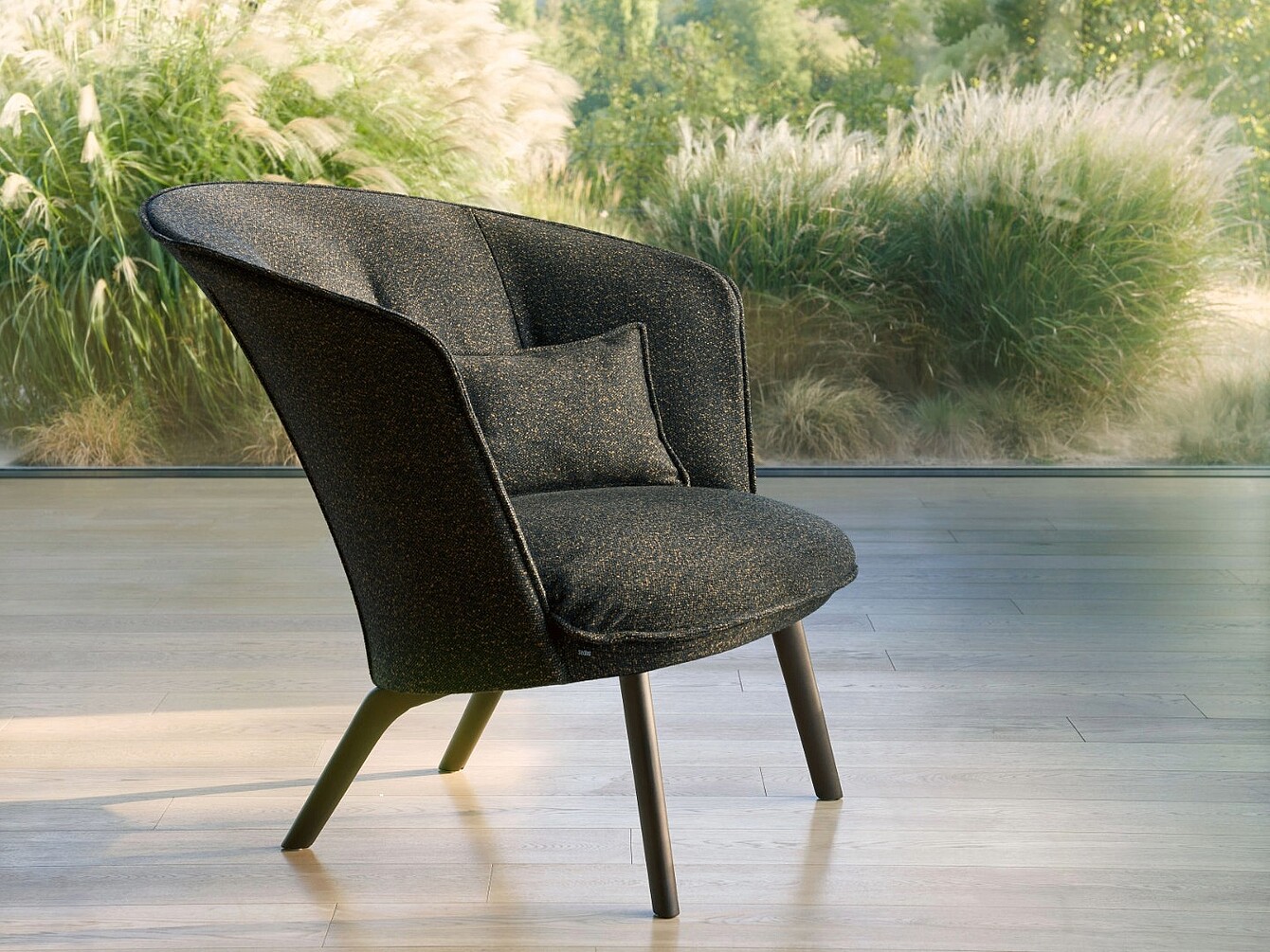
Within this sensory landscape, calming focus zones play a special role. They do not serve as enclosed retreats, but as places where one can refocus one’s attention. This is where se:cove comes in.
The soft-seating armchair creates a semi-enclosed area that reduces the immediate field of perception whilst maintaining a connection to the surroundings. Its tall, enveloping form shields against visual distractions, enhances subjective privacy and conveys a sense of spatial security – without isolation. It is precisely this balance that makes micro-focus spaces an important complement to open-plan working environments.
Soft seating as a sensory regulator
Soft seating is often associated with lounge areas or informal meetings. In the context of neurodiverse working environments, however, it takes on an additional function: it supports sensory self-regulation.
Soft materials, sheltered seating, and reduced lines of sight create a calm, restorative atmosphere. This minimises the cognitive strain that can result from constant environmental stimuli. Employees can conserve mental energy by filtering out distractions and direct their attention more effectively towards the task at hand.
The aim is not complete isolation, but a carefully controlled level of stimulation.
A haven of calm within a diverse office
Sensory-graded working environments function as a system. Active areas encourage interaction and creativity, communicative zones invite encounters, whilst quiet focus areas enable concentrated work.
se:cove takes on the role of a quiet haven within this overall concept. The armchair can be integrated wherever people need a brief respite from a highly stimulating environment – for example, in library zones, work cafés or transitional areas between communication and concentration. This creates easily accessible retreat options directly within the open-plan space, without the need to create additional rooms.
Inclusive working environments are created through freedom of choice
Neurodiversity does not mean creating specialised areas exclusively for individual user groups. Rather, all staff benefit from a working environment that takes into account different needs in terms of concentration and perception.
A sensory-graded office offers precisely these choices. Employees decide for themselves which environment best supports their current task.
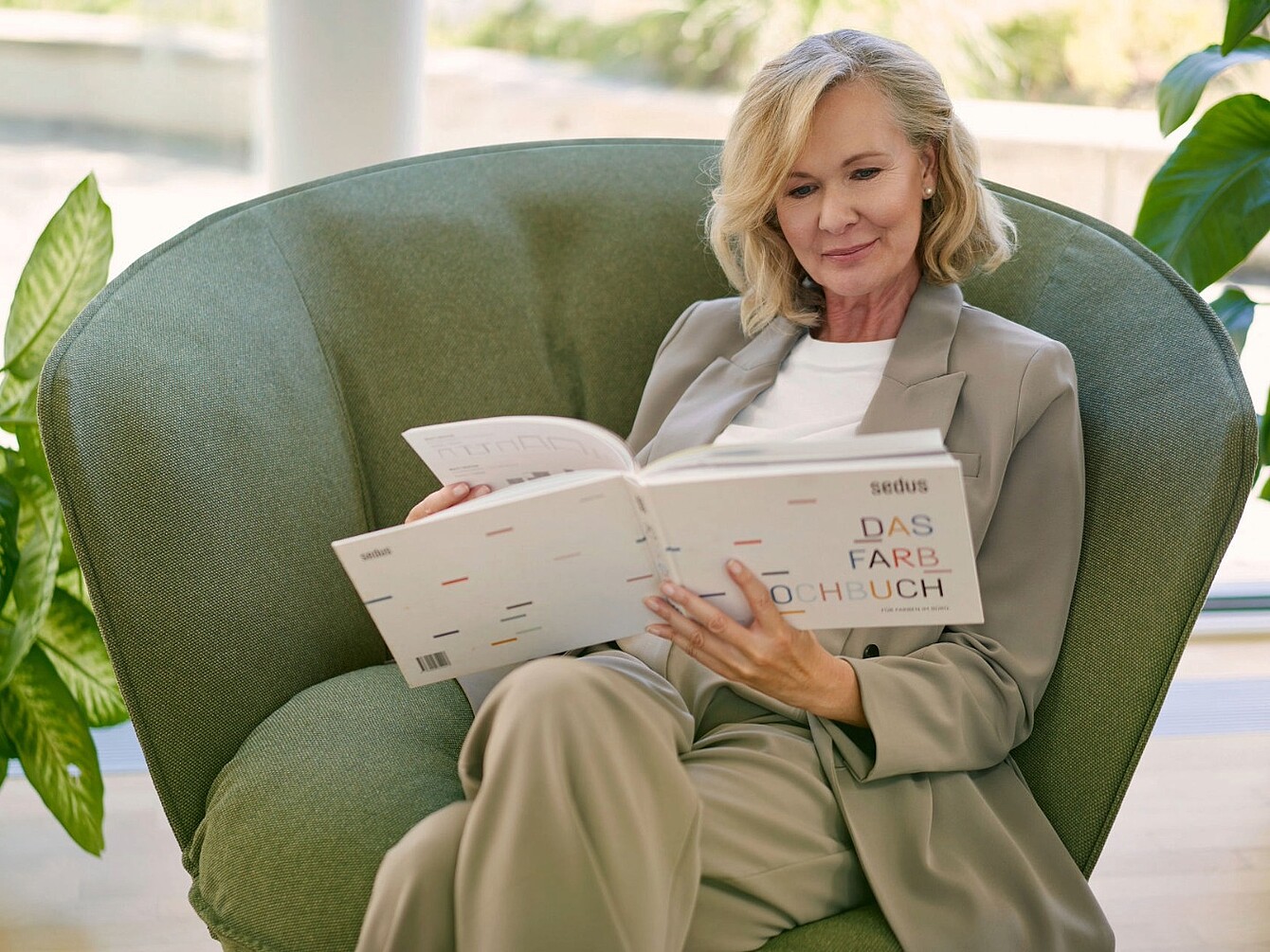
se:cove is more than just a comfortable lounge chair. It becomes a spatial tool for concentration, well-being and self-determination – and thus an important building block of a working environment in which different sensitivities are naturally taken into account.

social media channels: